Removing barriers to MEANINGFUL technology use!
Presentation: Assistive Technology and Purposeful Use of iPads
Today Patty Hovel, the Related Services Coordinator in our school district, and I will be co-presenting for the Parents United Consortium of SE Wisconsin. Our presentation will focus on the purposeful use of iPads in schools, the changing landscape in our classroom and the changing roles of our teachers and learners, and the process for determining if an iPad, or any assistive technology, will aid a student in their formalized learning journey.
If you are interested in accessing the presentation resources, they are available here: http://goo.gl/T76dUV
Just wanted to share with everybody. Sounds as if we may have just under 100 people in the audience today, but perhaps this is a topic that interests others in our online community. Patty is incredibly knowledgeable about technology, the process for selecting assistive technology, and the role it can play in the classroom. She is a wonderful resource and I'm excited to be presenting with her today!
YouTube Offering Free Audio Tracks; Aids Users in Following Copyright
Many of us have wrestled with the questions surrounding what constitutes educational use of media as it relates to copyright. While it is important for each of us to come to an understanding of what is appropriate fair use and what isn't in the world of copyrighted material, it is just as important that we begin to have discussions about copyright with our students.
As students publish more of their work for a larger audience, the discussion about copyright becomes a non-negotiable point of instruction that every educator must address. However, our own misinformation about copyright makes that conversation a difficult one to lead and to provide definitive advice to students on.
One resource I particularly appreciat for its simplicity and definitive answers, along with their offerings of pre-formatted lessons on teaching copyright to students, is the Teaching Copyright website (http://www.teachingcopyright.org/). The site isn't filled with so many lessons that you can't manage it all. In fact, the lessons and resources are incredibly direct and to the point -- something that those of us who don't love talking about copyright but know it is critical will appreciate. I'd encourage you to take a look, if only to further inform yourself as an educator prior to engaging in a multimedia project with students.
However, another key to the copyright conversation is helping students to find resources that are marked for full use because they are royalty free or have been given a Creative Commons copyright distinction. There are increasing libraries of these kinds of resources out there, but one notable service is now offering 150+ audio tracks that are free to download and use in media projects because they are truly royalty free!
YouTube recently announced it's expansion of a library of royalty free downloadable audio tracks. The tracks can be searched by genre, mood, instrucment, and track length. It's a great starting point for students to consider as they are looking for just the right feeling in their media project audio. It also allows educators to enter into the conversation about how audio tracks contribute to or detract from the meaning and personality of a piece! What a valuable lesson to engage in. Best of all, you can be certain that as your students share their project with the world, at least the audio portion of the project is safe to publish!
If you are interested in checking out the YouTube library, it's available here: http://www.youtube.com/audiolibrary?feature=ctsbs
Get Connected -- It's Connected Educator Month!
For as many people as a teacher comes into contact with during the day, anybody who has been in the classroom knows that teachers can often feel very isolated from other professionals.
Much of it has to do with the physical design of our school buildings. Much to do with the logistical design of our school day. Part of it is that so much of our day is spent with and preparing for our students that little time (or energy) is left to connect with other adults in meaningful ways.
Where to Start?
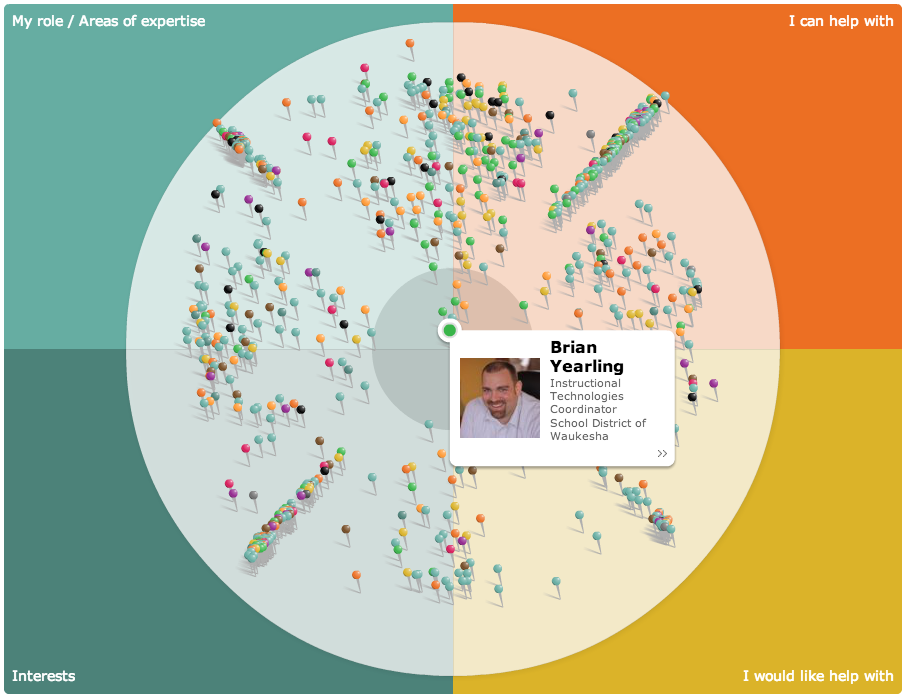
So go on -- give it a whirl, make a personal commitment, and see if you can get connected this month.