

Removing barriers to MEANINGFUL technology use!
Why the kids who need it most can’t afford to miss out
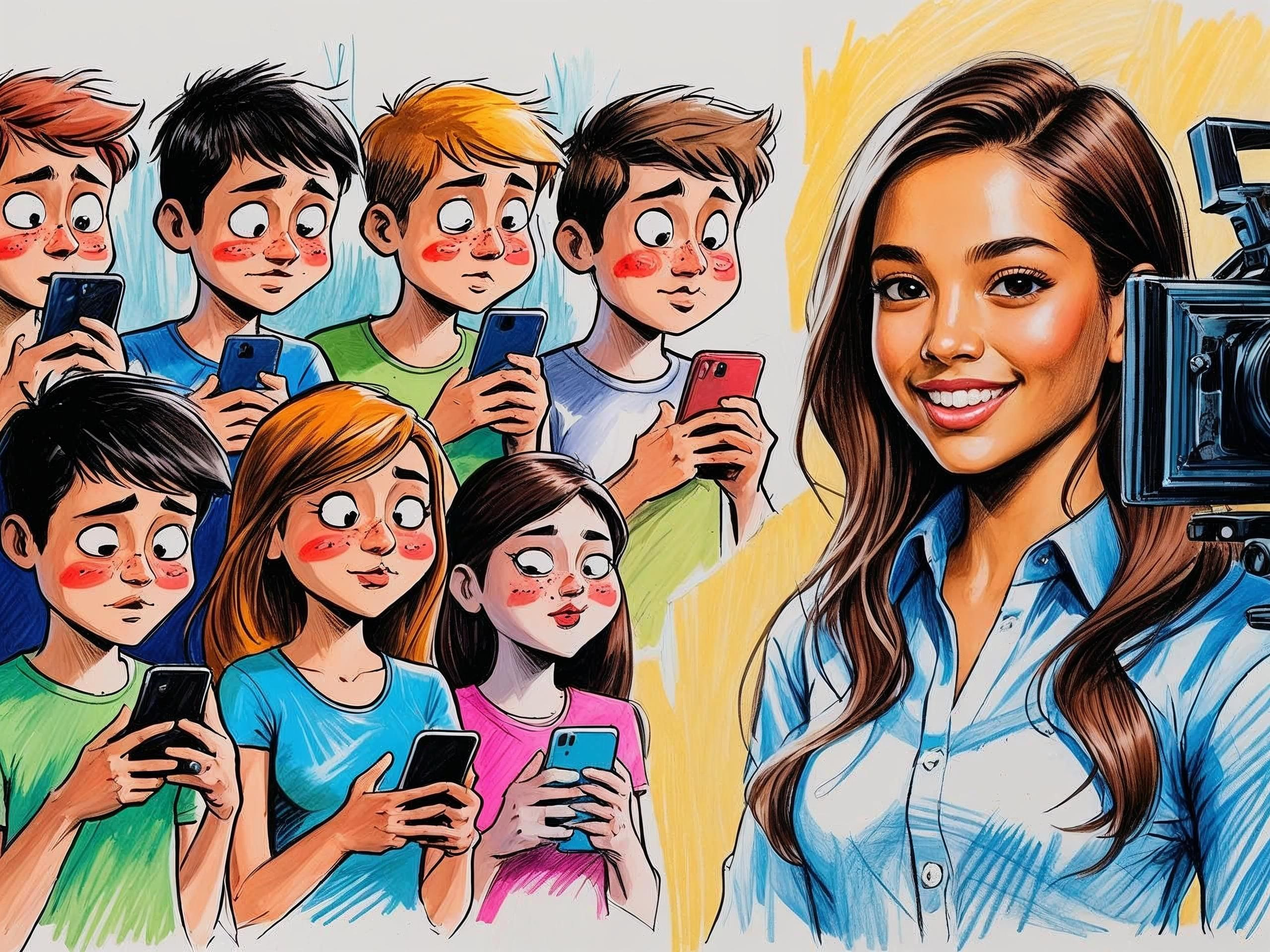
While some kids look on passively at the creators of the Internet, other young people are out there having their voices heard. Every student needs this opportunity, because every employee will need this critical skill set.
Here’s something I can’t stop noticing: kids are consuming the hell out of technology. At restaurants, family gatherings, even on my own couch, I see students glued to their screens, scrolling through content that’s been crafted by…other kids. Kids their age who already have the skills to edit videos, design graphics, or tell a story in a way that captivates an audience. And it makes me wonder: what about the ones who don’t? What about the kids who’ve never had the chance to use technology as more than a delivery system for someone else’s creativity?
That’s why I keep coming back to the U.S. Department of Education’s distinction between Passive Use and Active Use. Passive use is the endless swiping, tapping, and liking—the digital equivalent of sitting on the couch eating chips straight from the bag. Active use is where the magic happens: creating, collaborating, problem-solving, building something that didn’t exist before. And the reality is, the students who don’t see that kind of use modeled at home are the ones who need schools to make it happen most.
Because here’s the deal: in school, the stakes are low and the opportunities for feedback are high. Kids can experiment, fail spectacularly, and try again—without it costing them a job or a grade point average that follows them forever. If we don’t give them those reps now, then we’re setting them up to be perpetual consumers while a smaller group of peers keeps producing the content that shapes culture, conversation, and opportunity. It’s the difference between watching TikToks and knowing how to make the one that everyone else watches.
But here’s the twist: not all screen time is created equally. Parents sometimes (understandably) see their child staring at a school-issued device and lump it all into the same bucket of “too much screen time.” Yet what happens in a classroom where teachers are leveraging these tools for active use is light-years away from what happens when kids are left to scroll endlessly at home. When done right, that screen time is richer, more dynamic, and frankly, more essential to a student’s growth than ever before. At the same time, that comes with responsibility on our end: if teachers are simply allowing kids to consume passively in a 1:1 environment, then we’re not holding up our end of the bargain either.
So here’s my challenge—to educators and parents alike: we need to stop treating all screen time as the same. We need to make space for active use, for creativity, for problem-solving. Parents, trust that when teachers push your kids to create with technology, it’s not “extra screen time,” it’s practice for their future. And educators, let’s be honest with ourselves—if we aren’t using technology to amplify learning, to give kids agency and voice, then we’re just part of the problem. The world doesn’t need more scrollers. It needs more creators. And every kid deserves the chance to be one.
Not Every Leader Needs an Office: Technology Leadership Teams
In schools, we sometimes act like the only way to “be a leader” is to get a new title, a parking spot, or at least a slightly fancier email signature. The reality? There are only so many department chairs, coaches, and admin jobs to go around. But if we want young teachers to flourish, we can’t just sit back and wait a decade for those opportunities to open up. We need to give them chances to lead now—without pulling them out of the classroom.
That’s where something like our Vanguard Educational Technology Team comes in. Picture this: short, voluntary 45-minute meetings where teachers gather (no one’s forcing them) to learn about meaningful instructional technology. I plan the sessions based on their requests, their building goals, or what’s buzzing in the hallways. But here’s the twist: I don’t hog the mic. I highlight their experiences and then put them on stage to rock out and share what they’re doing. Sometimes administrators join in, which adds real power, but often it’s just teachers talking to teachers about practical ways to design for engagement and make learning more impactful.
It’s simple, but it’s huge. Teachers grow their practice, build confidence, and flex their leadership muscles—all while staying in the classroom where they’re needed most. If you want to grow leaders in your school, you don’t need to hand out new job titles. Just create a space like this, give them the mic, and watch what happens. Turns out, the best leaders don’t always need an office—they just need an audience. And the best news of all — these teachers are already sitting within your building, just waiting for an opportunity to share, grow, learn, and lead.
Same Tools… New Tricks?
I’ve been at this for a while now—23 years in the edtech world, 16 of them in my current role—and I’ve noticed something that makes me chuckle (and maybe makes me feel just a little old). When I first started as an instructional technology advocate, it felt like every week there was some shiny new tool to try. Everything was fresh, different, exciting. Fast forward two decades, and here I am…still talking about the same tools.

Now, don’t get me wrong—there’s a reason they’ve stuck around. Great tools stand the test of time. Padlet, for example, has been part of my toolkit forever. But the Padlet I was showing teachers back in the day is not the Padlet we have now. It’s evolved, borrowed from other platforms, absorbed the features of things like Flip and Jamboard, and is even dabbling in AI. It’s less a “new tool” at this point and more of a “Swiss Army knife that just keeps adding more gadgets.” (At this rate, I’m expecting Padlet to start brewing coffee.)
The funny part is that it leaves me in this strange spot. On one hand, it’s a win—teachers don’t have to feel like they’re on a hamster wheel of constant change. They can get good at a tool and keep using it for years, even as it adapts. That’s stability, and that’s rare in technology. On the other hand, I sometimes wonder: am I missing something? Are there truly no brand-new tools out there, or have we simply reached a point where the old guard is flexible enough to do everything we need?
Of course, AI is the one big exception. That’s the genuinely “new new” right now—different, disruptive, and not just another feature tacked on to an existing platform. But outside of AI, the pace of new tools has slowed, and that’s got me asking: are we in a golden age of mature, reliable edtech, or is there space waiting for the next big thing?
Either way, I guess the irony is that after 23 years of “keeping up,” I’m still standing in front of teachers, excitedly sharing…Padlet. Maybe the tools aren’t what’s new anymore—it’s the ways we keep using them. Or maybe I really am just getting old. (Let me know if you see Padlet adding a rocking chair feature.)