

Removing barriers to MEANINGFUL technology use!
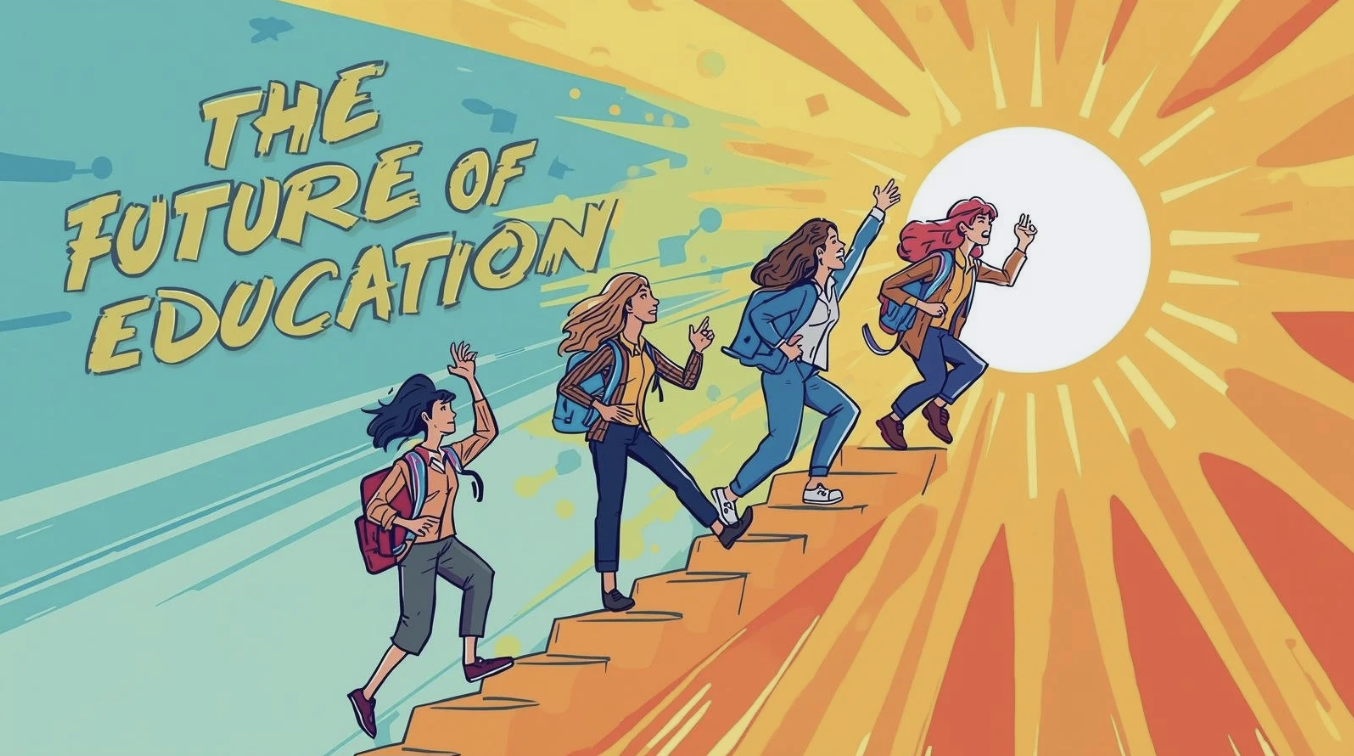
Legacy, Forward: Young Educators Leading at a Critical Turning Point
Educators new to the profession stand at a critical decision point where they can accept K-12 education as it is, or forge a new path that leads classrooms and schools where they need to go.

If you’re a pre-service teacher, a first-year, or somewhere in that foggy stretch between “I love this job” and “I’m not sure this is what I signed up for,” this one’s for you.
Make it stand out
You entered education with a picture in your head.
Maybe it looked like inspiring discussions, meaningful relationships, creative lessons, and the occasional lightbulb moment that reminds you why this work matters.
Maybe it looked like a beautiful opus of student success stories. Maybe your goal was to make a lasting impact on your local community, Possibly you even held a vision of an older version of yourself having served generations of families in the same community. Maybe it also looked like summers off, stable benefits, and a sense that if you worked hard and cared deeply, the system would meet you halfway.
I won’t sugarcoat this: parts of that picture were real. Other parts of it may need to be revised.
And none of those assumptions make you naive. That has been the story in education for a long time, and you were wise to assume some of these truths of the role. The reality is that things are changing, and that makes our profession — well — like any other profession: imperfect and uncertain.
You’re Not Wrong—School Is About to Change (Again)
Let’s start with an anchoring truth of education: learning. Learning is ultimately our business. And if you see learning as the constant, rather than focusing on the construct of what schools should look like, you have your eye on the ball. Some things about learning will never change:
People learn better in community.
Relationships matter more than strategies.
Engagement isn’t fluff—it’s fuel for deepening understanding and thoughtful consideration.
Relevance is the difference between learner compliance and authentic curiosity.
Those truths are timeless.
But the structures wrapped around them? The way we have traditionally done school? The world is shaking those structure and traditions. Those realities about what school looks like are absolutely up for renegotiation.
Public education is standing in a wash—between what school has always been and what it has to become. And whether we like it or not, you are entering the profession right at that breaking point. To be fair, people have been predicting the “end” or “reinvention” of school for decades, and I may sound like just another voice forecasting a future that never fully arrives. But this moment feels different. We’re seeing multiple pressure points hit public education all at once: ongoing funding challenges, intensifying political scrutiny, private companies recognizing schools as a massive untapped market, a societal expectation that everything be personalized on demand, and the sudden arrival of AI tools that are reshaping how work and learning happen everywhere else. Taken together, the reality is this—schools aren’t being nudged to change. They’re being pummeled from every direction.
And if we are being honest, this system — at least on a micro level — didn’t work well for many of you as students. You felt it. You lived it. You survived classes that prized sitting still over thinking deeply, coverage over understanding, and tradition over relevance. (And if it DID work well for you, I promise there were students all around you in those classrooms who felt differently.)
And yet—you still chose this work. (Thank you!)
That tells me something important.
You Matter More Than You Think
You are our most experienced experts at being students in modern schools. You’ve seen the best and worst up close as students. You know when learning feels authentic and when it feels like we are all just playing “traditional school” because that is what the schedule says to do. And at the same time, you have traded hats and started to see that system with different eyes. You have recently completed your coursework, learned the latest educational theories, and witnessed the classroom in the teacher’s shoes.
That perspective is not a weakness. Instead, it’s the seed of innovation.
But here’s the hard truth: caring about being a good teacher alone won’t be enough anymore.
If schools don’t evolve, if teachers don’t make the leap to a new model of teaching and learning —someone else will happily do it to us.
Education is moving closer to an Amazon model than the guaranteed monopoly it has long been in the United States. Schools cannot simply assume families will stay local to community schools because we have always existed. As public schools, we are local businesses with a public mission. That means we must fight harder for relevance, trust, and impact.
That doesn’t mean becoming cold or corporate. It means being clear about what actually matters: learning.
Let Go of What Doesn’t Serve the Mission
No matter what you hear from others, know this: You don’t need to carry everything the system hands you.
Some practices schools embrace are relevant and meaningful to learning. Some practices are valuable traditions. Some are habits. Others are pet projects, failed initiatives that have yet to fully dissolve, leadership preferences, community expectations, or a boisterous colleague’s inaccurate perspective.
You will need to think through everything you agree to do in your classroom from this point forward. Each habit, tradition, practice, initiative, and preference you embrace and practice, you permit to be a part of what school will look like in the future.
Here’s your permission slip:
You can question systems that prioritize compliance over curiosity.
You can redesign learning instead of just delivering it.
You can use technology to liberate time and personalize learning, not just digitize worksheets.
You can push back—with professionalism and purpose—when policies don’t serve students.
Innovation doesn’t mean burning it all down. It means asking one honest question, over and over:
“Does this help students learn better?”
If the answer is no, the tradition may not deserve your loyalty. While you may have to read the room and the situation. (education is a social business that serves many purposes, and there is rarely black and white answers — everything lives in the grey), you may need to push back on accepted norms of schools.
As a young, inspired, thoughtful educator, uncovering that something that has been embraced by the system but does not support student learning should definitely lead you to ask more questions.
Be Human First. Everything Else Is Secondary.
Here’s the part no prep program can fully prepare you for:
Your greatest impact won’t come from being perfect. It will come from being present.
AI and technology will play an important role in the classroom of the future. It has to for us to compete, to stay current, and to transform our educational institutions meaningfully to serve the next generation of learners. But that does not mean educators like you, the people who stepped forward to make a difference, do not have a role in this transformation.
Your humanity is what will make learning and schools the special place they have always been. Lean into family partnerships. Build trust before you build rigor. Let students know they are seen before they are assessed. Show up as a real person who listens, adapts, and believes in them—even when the system feels heavy.
And modernize! Learn the tech tools that are available to you. Ask how they can serve your mission and streamline your work.
Ironically, modernization can help you do the human side of teaching (the most valuable part — the part you signed up for and are most eager to do) more, not less.
When tools handle the logistics, you get time back. When learning is personalized, relationships deepen. When school stops pretending one size fits all, teachers stop pretending they’re okay being exhausted all the time.
This shift—if done well—can actually lead to more balance, more joy, and more sustainability. It can lead to stronger schools, happier teachers, and better learning. Schools that make this transformation will re-assert their place as a foundational pillar of the community.
You Will Be Questioned. That Means You’re Doing Something Right.
You will be challenged by colleagues who benefited from the old system. You will be questioned by families who don’t yet see the urgency. This is especially true for those families whose success is attributed to the way school was in the past. They may end up being the harshest critics of change, because they are also experts on education (and it worked for them).
You will feel the tension of pushing for change that won’t immediately benefit everyone equally.
That discomfort isn’t failure. It’s leadership. And you don’t need a title to lead.
As an educator, regardless of your role right now, you are in the perfect position to lead from your vantage point. This change won’t happen because a superintendent, or a director, or a principal said it should and started an initiative. It will happen because professional educators across the country acknowledge that the time for meaningful change is here and agree that the essential outcome is a system that prioritizes student learning.
And you won’t be doing it alone. There are seasoned educators — rooting for you — who know the system must change and are ready to stand beside you, not in your way.
Hold Onto Your Why—And Be Willing to Rewrite the How
You didn’t enter this profession to protect structures. You entered it to help people grow. That mission hasn’t changed. The methods must.
If we do this right — if we lean into connection, creativity, flexibility, courage, and the tools and structures needed to modernize the educational system — we don’t lose the heart of education. We finally get to center in on the real reason we got into education in the first place. That is an important part of the recipe. It will help to make sure you are a part of the educational solution not just today or tomorrow, but far beyond this school year.
And one day, much sooner than you think, someone newer will be watching you. (I know you don’t believe this. I am telling you from experience — it is true.)
Think about what you want them to say about you and your legacy in education. They will have the opportunity to feel the courage and passion it required to push for meaningful change. They will be experiencing what meaningful transformation of school looks like. They will learn what the new structure of school is and how it benefits learners and supports learning. They may even be pushing up against the changes that your generation of educators pushed for in an attempt to modernize and change with the times.
They will be copying plays out of your educational playbook.
Make them worth copying.

Legacy in Education: The Work You Leave Behind
Legacy in education isn’t the marble-statue kind—it’s the everyday kind: how you showed up, who you lifted, and what people remember when you’re gone. And for teachers nearing the end of their careers, the truth is this: your greatest impact might not be behind you—it might be right now, in how you finish and what the next generation learns from watching you.
In this line of work, we talk a lot about learning targets, benchmarks, and growth. But the longer I stay in education, the more I think about something we don’t name nearly enough: legacy.
Not the dramatic, marble-statue kind. More like the “How did I show up today—and did it matter?” kind.
I’ve been thinking about this a lot lately. I’m someone who’s built their life around learning—showing up every day, trying to be a little better than yesterday, trying to serve students and staff in ways that actually matter. That’s why most of us got into this business in the first place. Not the freedom of wearing jeans on Fridays. Definitely not the meetings that could have been emails . We are here for the kids and the colleagues who make this work feel purposeful.
But this reflection isn’t about just me. It’s about the teachers who are rounding that final bend of their careers.
You know who you are.
Maybe you’re counting years, months, or the “After winter break, only 78 more Mondays” kind of countdown.
Maybe there’s nowhere up left to climb on the salary schedule.
Maybe this is your third time on the pendulum ride of educational philosophy, and you're thinking, “Didn’t we already do this in ’09? And guess what, folks—it worked then, too.”
Maybe the connection with kids has shifted—still there, still meaningful, but not quite the same spark you had at 22, or 32, or even your early 40s.
And yet… here you are.
Still standing.
Still showing up.
Still carrying decades of experience that no workshop, no webinar, and no AI tool (hi!) can replicate.
The Truth We Don’t Say Out Loud Enough
The era of teachers staying in one place for their whole career may be fading, but it’s definitely not gone. And honestly? We need the ones who’ve stayed. Desperately.

Because these are the people who bring:
Stability when the system shifts for the nineteenth time.
Perspective when new ideas show up claiming to be “revolutionary.”
Sanity when someone suggests changing the bell schedule… again.
Impact—the kind you only earn after touching thousands of student lives and mentoring dozens of colleagues.
And here's the part we don’t talk about nearly enough:
Your greatest impact might not be behind you. It might actually be right now.
Not because of test scores or lesson plans or committees you’ve chaired, but because of what younger educators see when they look at you.
They’re watching how you finish.
Teaching Young Teachers What the Profession Really Is
This generation of young teachers is entering a profession that is harder, louder, more public, and more scrutinized than ever. They need models—real ones. People who have seen the highs and lows, who’ve reinvented themselves more times than an iOS update, and who still show up with dignity and purpose. People who know the realities of the hard days, and know that the best days make the hard days worth enduring!
This is where legacy comes in.
We get to show young educators:
That the profession still matters.
That you can evolve and still stay true to who you are.
That you can choose collaboration over competition.
That being seasoned doesn’t mean being cynical.
That curiosity doesn’t have an age limit.
Kids need you, yes. But young teachers might need you even more. They need to see that resilience is a skill. That joy is a choice. And that you can walk into retirement not burned out and bitter, but proud—and dare I say—just as energetic as the 24-year-old across the hall… in your own “seasoned professional” way.
So, What Will They Say When You Leave?
Legacy isn’t what we intended to do. It’s what people remember we actually did.
So we all get to decide:
Will young teachers say we were stubborn, cranky, and disinterested in anything invented after 2015?
Or will they say we modeled growth, generosity, and the kind of grounded wisdom that makes this profession feel like a calling again?
Public schools need that version of us now more than ever.
And someday—when you walk out for the last time, keys turned in, badge deactivated—you’ll know you left something behind that can’t be measured but absolutely can be felt.
A legacy worth talking about.
Start the Year Off Strong: Setting 1:1 Routines That Stick
Here’s the thing about teaching in a 1:1 classroom: if you don’t set routines right away, your kids will. And trust me—you’re not going to like their version. Their routines usually involve mystery games, YouTube rabbit holes, and the fastest window-minimizing you’ve ever seen.
Day One is where you set the tone. Not after you “get to know them.” Not once you’re “done with the syllabus.” Day One. Show them the devices are tools, not toys. Do something simple but meaningful—like having students record themselves reading a reflection or answering a fun question. It’s easy, it gets them using the tech, and it says, “In this class, we actually do stuff with these.”
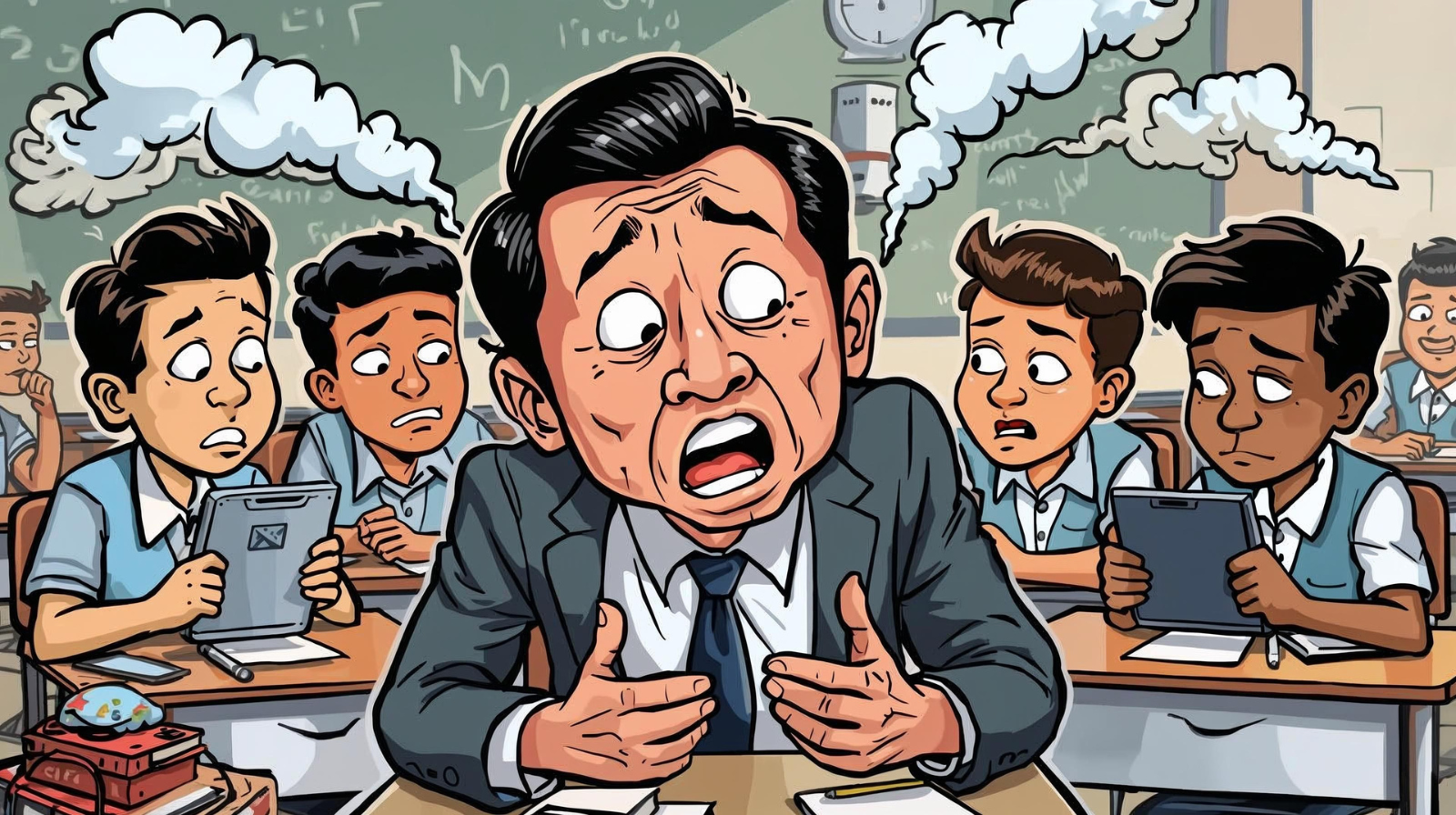
You’ll also need an attention signal. Screens are powerful magnets. Don’t waste your voice yelling “eyes up here!” 47 times a day. Pick something that fits you—music clip, call-and-response, even a corny joke—and use it every time. Kids will roll their eyes… which means it’s working.
And plan ahead for when a device needs a break. Have a neutral “parking spot” for iPads/laptops. It’s not a punishment, it’s just a reset. Saves you from a lot of tug-of-wars over screens.
Why bother with all this? Because research from Quaglia and Corso reminds us that students really come to school for two reasons: to make friends and to feel successful. When your routines build belonging and give them clear wins with technology, you’re giving them both. That’s classroom culture, not just classroom management.
Bottom line: start strong, because the habits you set on Day One are the ones you’ll be living with in May. And if you don’t set them? Well… your students will. And let’s just say their version involves a lot more Minecraft than you planned for.