Removing barriers to MEANINGFUL technology use!

Legacy in Education: The Work You Leave Behind
Legacy in education isn’t the marble-statue kind—it’s the everyday kind: how you showed up, who you lifted, and what people remember when you’re gone. And for teachers nearing the end of their careers, the truth is this: your greatest impact might not be behind you—it might be right now, in how you finish and what the next generation learns from watching you.
In this line of work, we talk a lot about learning targets, benchmarks, and growth. But the longer I stay in education, the more I think about something we don’t name nearly enough: legacy.
Not the dramatic, marble-statue kind. More like the “How did I show up today—and did it matter?” kind.
I’ve been thinking about this a lot lately. I’m someone who’s built their life around learning—showing up every day, trying to be a little better than yesterday, trying to serve students and staff in ways that actually matter. That’s why most of us got into this business in the first place. Not the freedom of wearing jeans on Fridays. Definitely not the meetings that could have been emails . We are here for the kids and the colleagues who make this work feel purposeful.
But this reflection isn’t about just me. It’s about the teachers who are rounding that final bend of their careers.
You know who you are.
Maybe you’re counting years, months, or the “After winter break, only 78 more Mondays” kind of countdown.
Maybe there’s nowhere up left to climb on the salary schedule.
Maybe this is your third time on the pendulum ride of educational philosophy, and you're thinking, “Didn’t we already do this in ’09? And guess what, folks—it worked then, too.”
Maybe the connection with kids has shifted—still there, still meaningful, but not quite the same spark you had at 22, or 32, or even your early 40s.
And yet… here you are.
Still standing.
Still showing up.
Still carrying decades of experience that no workshop, no webinar, and no AI tool (hi!) can replicate.
The Truth We Don’t Say Out Loud Enough
The era of teachers staying in one place for their whole career may be fading, but it’s definitely not gone. And honestly? We need the ones who’ve stayed. Desperately.

Because these are the people who bring:
Stability when the system shifts for the nineteenth time.
Perspective when new ideas show up claiming to be “revolutionary.”
Sanity when someone suggests changing the bell schedule… again.
Impact—the kind you only earn after touching thousands of student lives and mentoring dozens of colleagues.
And here's the part we don’t talk about nearly enough:
Your greatest impact might not be behind you. It might actually be right now.
Not because of test scores or lesson plans or committees you’ve chaired, but because of what younger educators see when they look at you.
They’re watching how you finish.
Teaching Young Teachers What the Profession Really Is
This generation of young teachers is entering a profession that is harder, louder, more public, and more scrutinized than ever. They need models—real ones. People who have seen the highs and lows, who’ve reinvented themselves more times than an iOS update, and who still show up with dignity and purpose. People who know the realities of the hard days, and know that the best days make the hard days worth enduring!
This is where legacy comes in.
We get to show young educators:
That the profession still matters.
That you can evolve and still stay true to who you are.
That you can choose collaboration over competition.
That being seasoned doesn’t mean being cynical.
That curiosity doesn’t have an age limit.
Kids need you, yes. But young teachers might need you even more. They need to see that resilience is a skill. That joy is a choice. And that you can walk into retirement not burned out and bitter, but proud—and dare I say—just as energetic as the 24-year-old across the hall… in your own “seasoned professional” way.
So, What Will They Say When You Leave?
Legacy isn’t what we intended to do. It’s what people remember we actually did.
So we all get to decide:
Will young teachers say we were stubborn, cranky, and disinterested in anything invented after 2015?
Or will they say we modeled growth, generosity, and the kind of grounded wisdom that makes this profession feel like a calling again?
Public schools need that version of us now more than ever.
And someday—when you walk out for the last time, keys turned in, badge deactivated—you’ll know you left something behind that can’t be measured but absolutely can be felt.
A legacy worth talking about.
Start the Year Off Strong: Setting 1:1 Routines That Stick
Here’s the thing about teaching in a 1:1 classroom: if you don’t set routines right away, your kids will. And trust me—you’re not going to like their version. Their routines usually involve mystery games, YouTube rabbit holes, and the fastest window-minimizing you’ve ever seen.
Day One is where you set the tone. Not after you “get to know them.” Not once you’re “done with the syllabus.” Day One. Show them the devices are tools, not toys. Do something simple but meaningful—like having students record themselves reading a reflection or answering a fun question. It’s easy, it gets them using the tech, and it says, “In this class, we actually do stuff with these.”
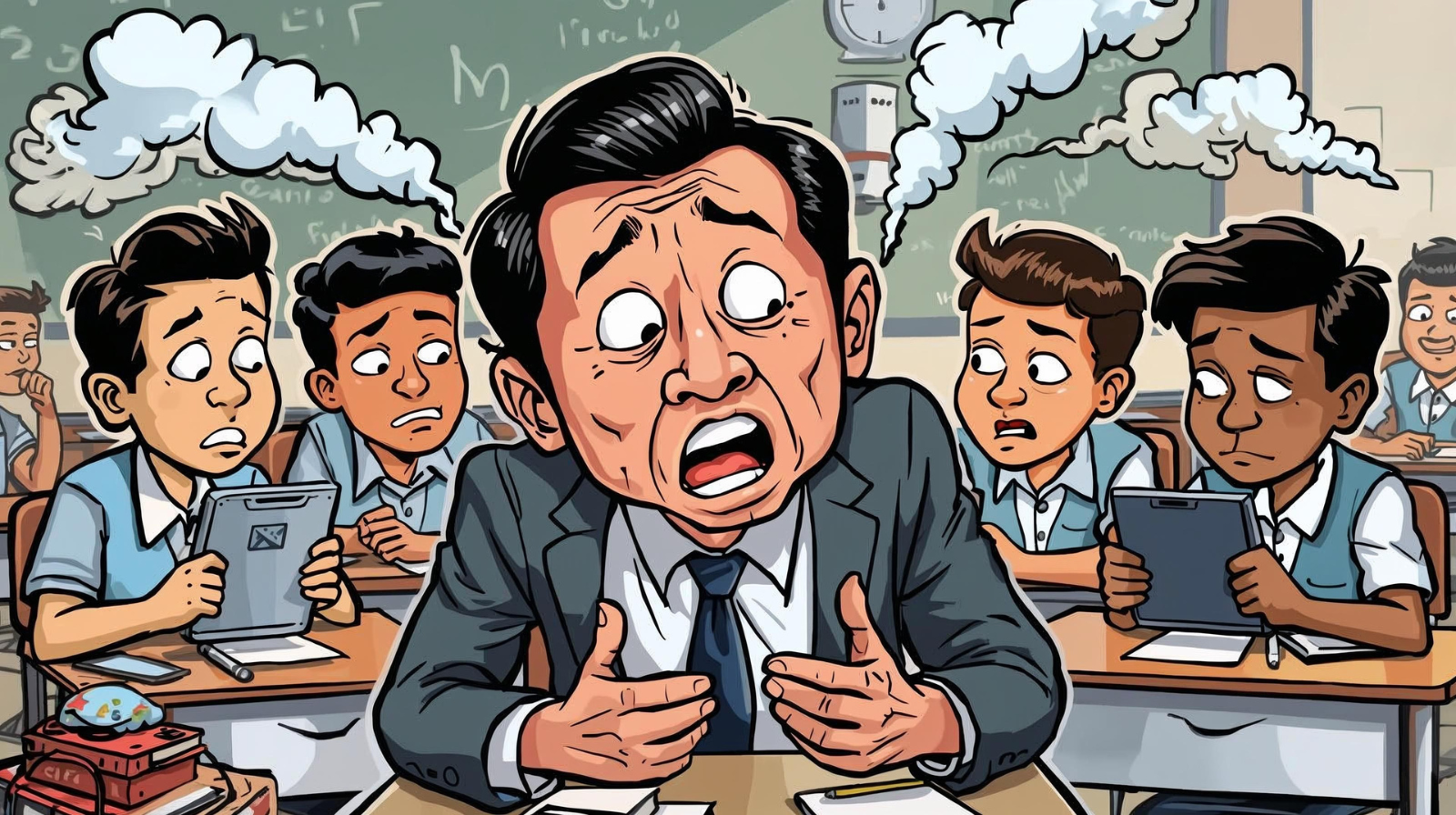
You’ll also need an attention signal. Screens are powerful magnets. Don’t waste your voice yelling “eyes up here!” 47 times a day. Pick something that fits you—music clip, call-and-response, even a corny joke—and use it every time. Kids will roll their eyes… which means it’s working.
And plan ahead for when a device needs a break. Have a neutral “parking spot” for iPads/laptops. It’s not a punishment, it’s just a reset. Saves you from a lot of tug-of-wars over screens.
Why bother with all this? Because research from Quaglia and Corso reminds us that students really come to school for two reasons: to make friends and to feel successful. When your routines build belonging and give them clear wins with technology, you’re giving them both. That’s classroom culture, not just classroom management.
Bottom line: start strong, because the habits you set on Day One are the ones you’ll be living with in May. And if you don’t set them? Well… your students will. And let’s just say their version involves a lot more Minecraft than you planned for.
Stop Making Students Guess: AI Policies Pushing for Clarity in the Classroom
We’re reaching a turning point with AI in schools. Students are using it every day—sometimes intentionally, sometimes without even realizing it—because AI is increasingly embedded in the very tools they use. The question isn’t whether AI shows up in the classroom, but whether we as educators are ready to provide clarity about how it can be used.
Some districts are leading the way with smart, forward-thinking policies. They aren’t issuing blanket bans or pretending AI can be locked out. Instead, they’re asking teachers to do the real work of being clear: when is AI a support, when is it a shortcut, and when does it cross the line into cheating? This isn’t about being permissive—it’s about being fair.
Because here’s the reality: when we simply declare “AI is never allowed,” we aren’t stopping students from using it. We’re just setting them up to fail. Without explicit guidance, students are left to guess where the boundaries are. Some will guess wrong, and then they’re not only penalized for crossing a line, they’re penalized for not even knowing where the line was in the first place.
Districts that call on teachers to spell out expectations assignment by assignment are actually doing two things: they’re leveling the playing field for students, and they’re pushing teachers to be sharper about their learning outcomes. If I tell my students “AI is off-limits on this essay,” I’d better be clear about why. If I say, “Use AI to brainstorm but not to draft,” then I’ve clarified both the task and the skill I want them to practice.
That’s why I admire districts that embrace policies built on clarity and context rather than fear and prohibition. They’re not just adapting to a new technology—they’re modeling the kind of teaching we want for the future: transparent, intentional, and focused on learning.